DFS Group is the world's leading luxury travel retailer — a brand built on the duty-free shopping experience. As travel behaviour shifted and customers became more digitally native, DFS needed a website that matched the premium standard of their physical stores. This project was a comprehensive revamp: modernising the digital experience, improving product discovery, and building something that could serve both the Chinese market and international audiences well.

Role & Team
I worked closely with the Business Analyst team, translating research insights and business requirements into user-centred design decisions. My role covered UX research, information architecture, interaction design, and visual design — from benchmark analysis through to final UI.
Project Goal
Support DFS's digital transformation by creating a high-performing ecommerce experience that made luxury shopping online feel as considered and curated as it does in-store. Core objectives: improve product discovery, streamline the path to purchase, and build a personalised experience that worked for solo travellers, group shoppers, and cruise passengers alike.
User Journey & Visual Design
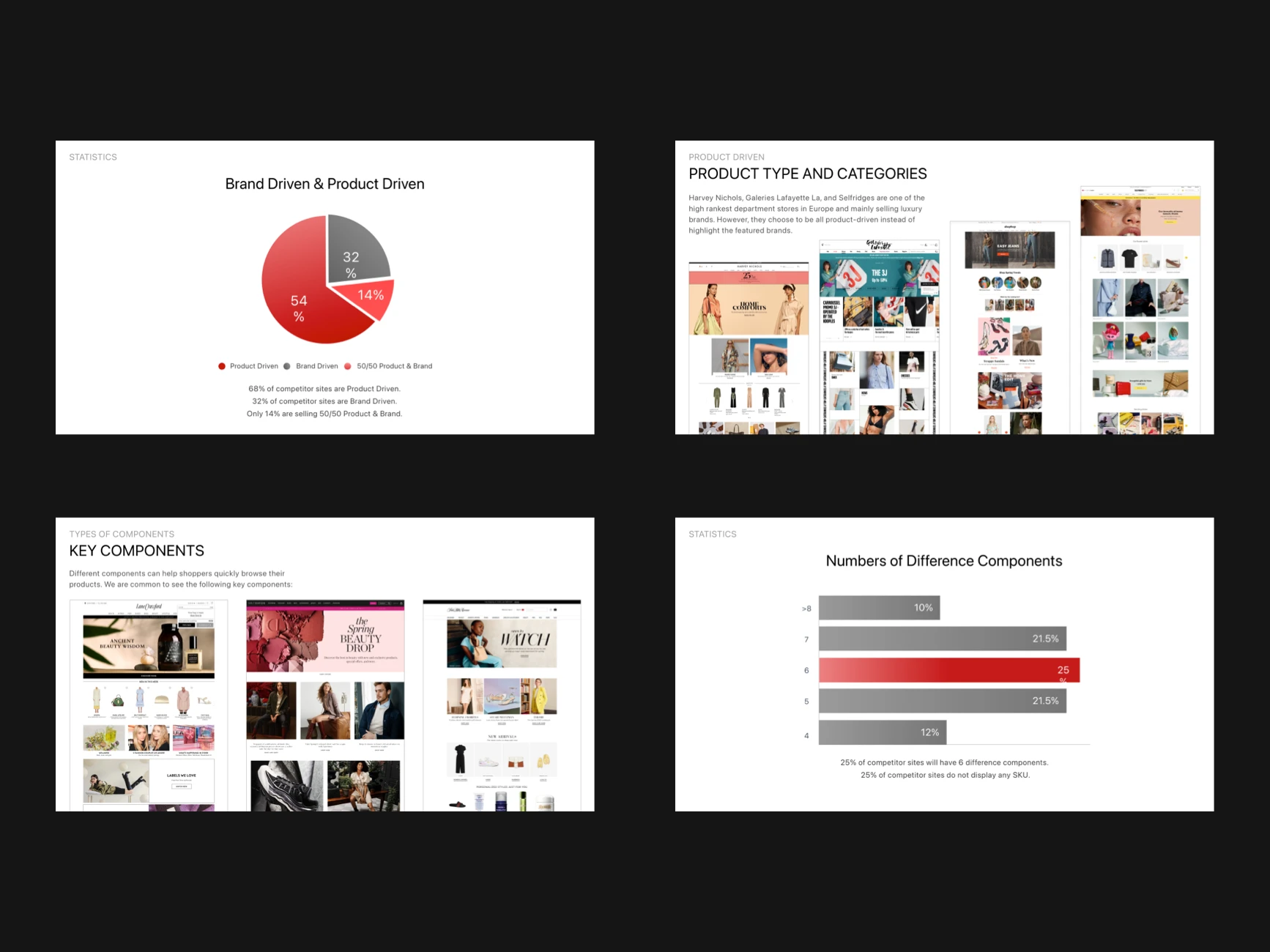
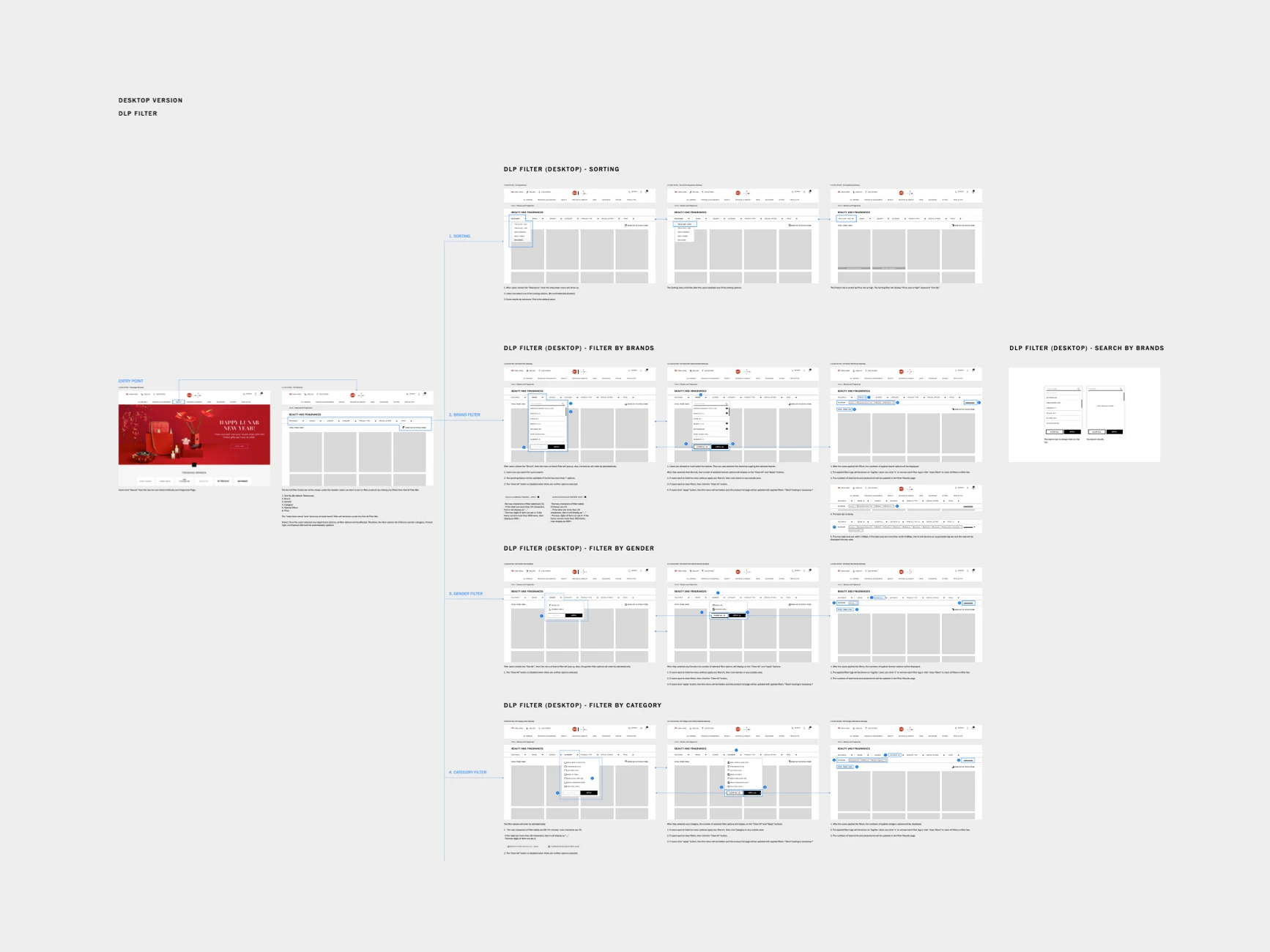
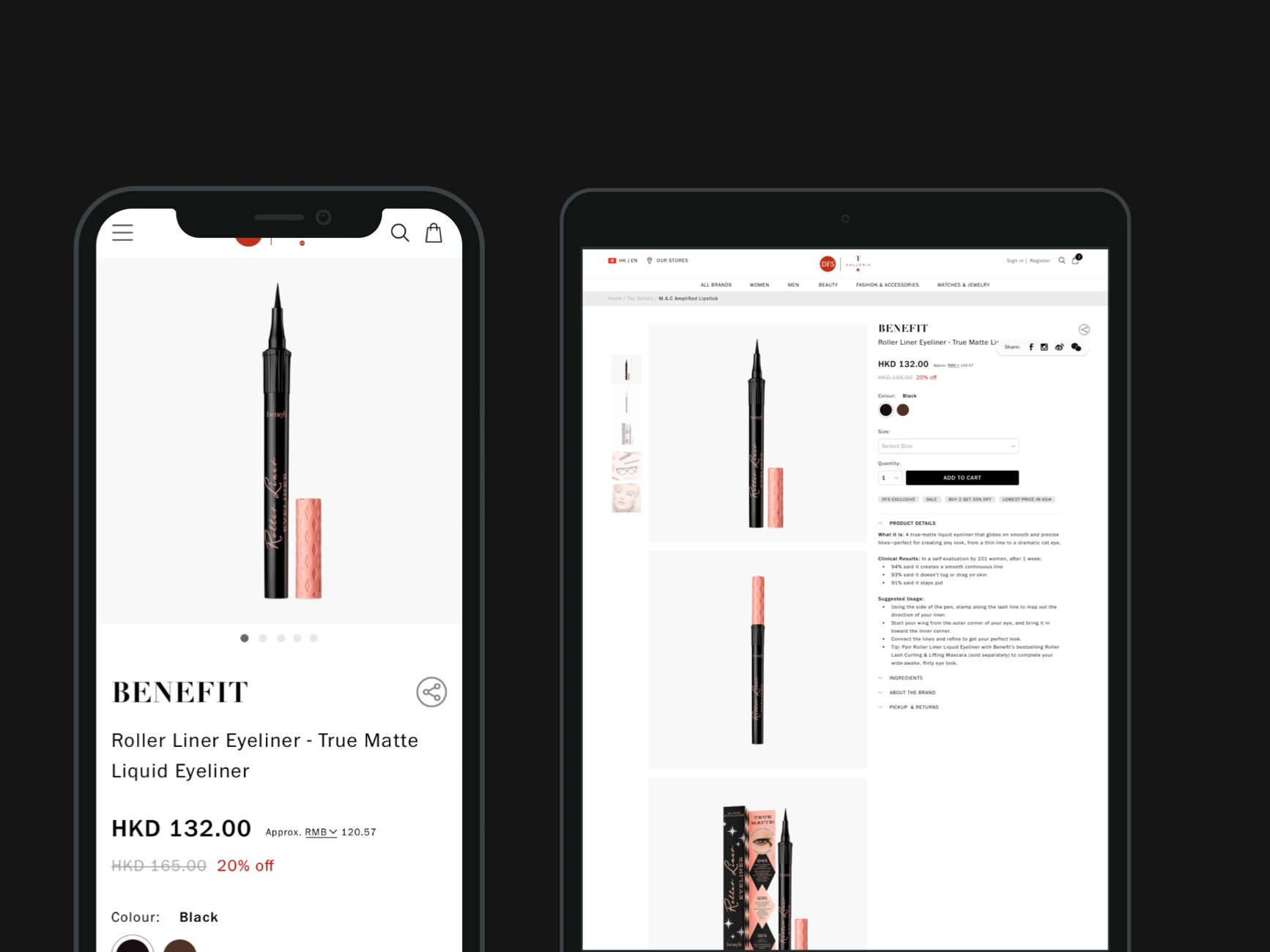
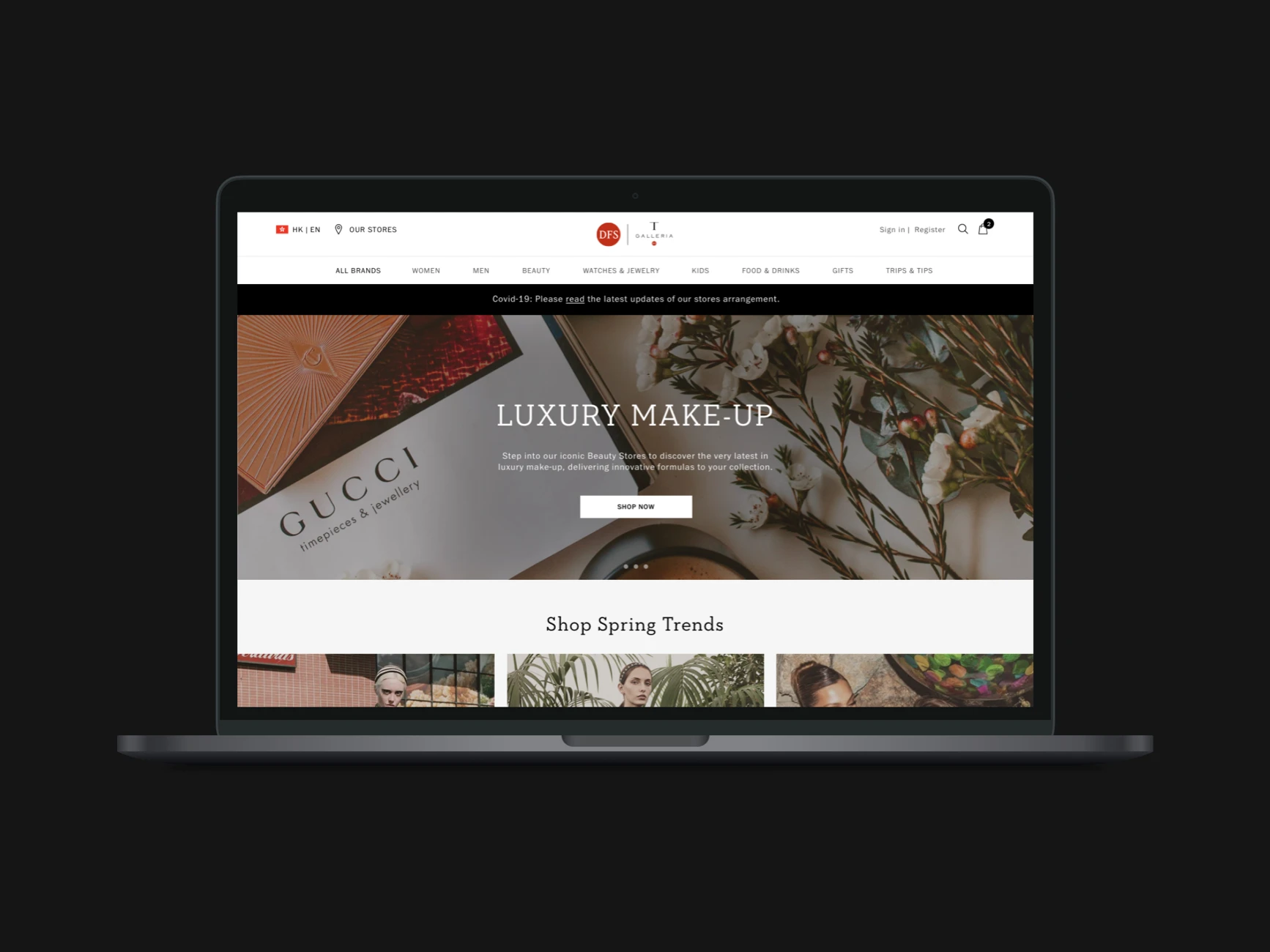
The research phase included benchmark documents comparing DFS against global luxury ecommerce standards — drawing insights from both the luxury sector and adjacent industries to inform recommendations suited to the Chinese market and international audiences. Those insights shaped decisions across information architecture, navigation design, and personalisation logic. The visual direction emphasised clean, modern presentation with strong brand visuals and a responsive layout across devices. Enhanced filtering and sorting, personalised product recommendations, and a streamlined checkout flow worked together to reduce friction between browsing and buying — making the experience feel curated rather than overwhelming, which matters enormously in luxury retail.
Project Learnings
Designing for luxury ecommerce means two things in tension: the experience needs to be effortless, but it also needs to feel considered and premium at every step. Getting that balance right — especially across different cultural markets — required constant testing of assumptions and close collaboration with the business analysis team to make sure design decisions were grounded in real user behaviour, not just aesthetic preference.