Sending money across borders shouldn't require a finance degree. YBEX is a Hong Kong-based fintech platform that helps individuals and businesses compare foreign exchange providers and lock in competitive rates for remittance and cross-border payments. When I joined the project, the core problem wasn't missing features — it was that the features already there were buried under unnecessary complexity.
Role & Team
Product designer, responsible for visual design, UI/UX, and overall product design. I worked directly with internal stakeholders to define priorities, align design decisions with business goals, and refine the experience from the ground up.
Project Goal
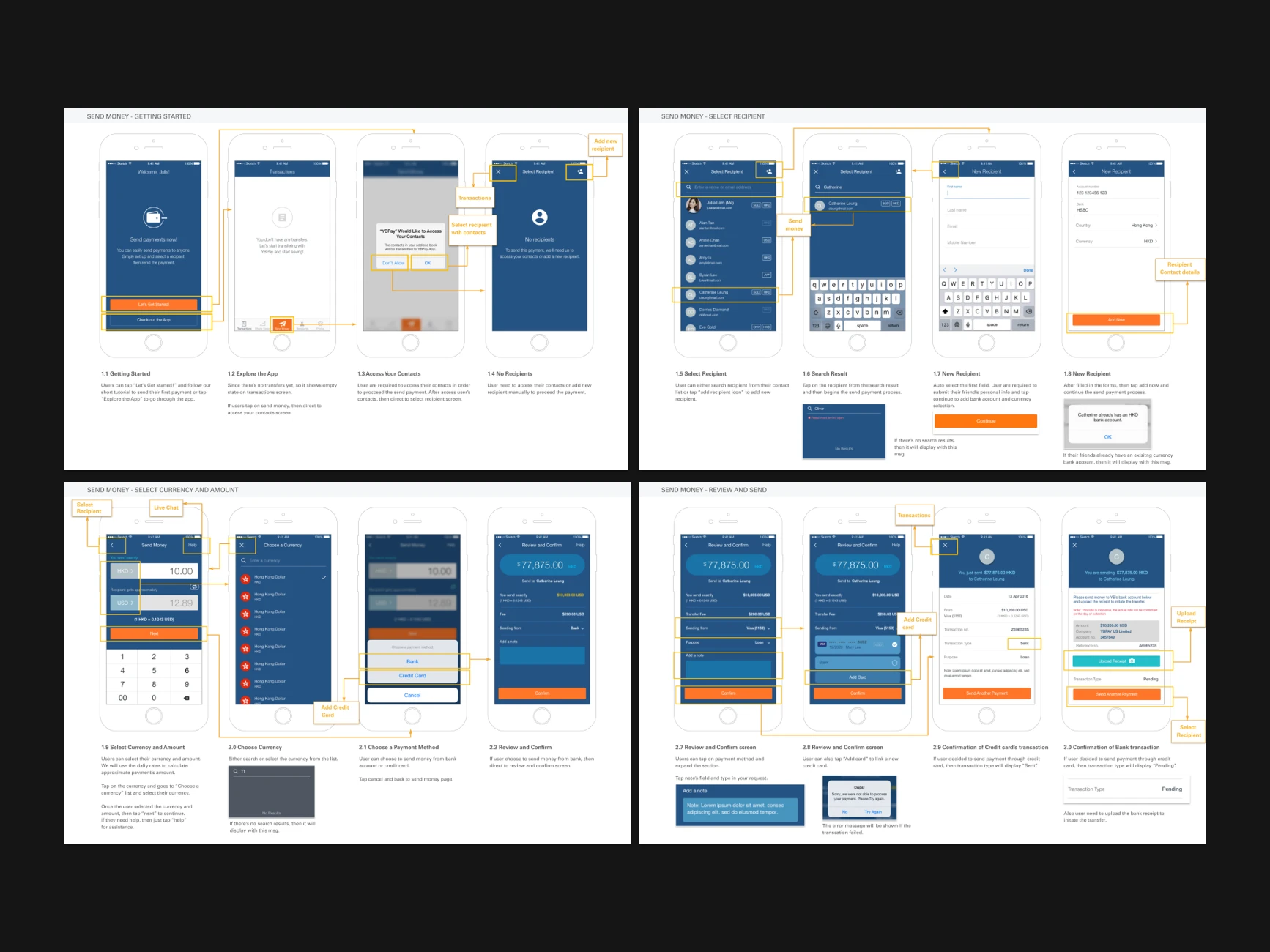
Make the two things users came to YBEX for — checking live exchange rates and sending payments — genuinely fast and simple to do. The existing product asked users to complete up to eight steps to send a single payment. That number needed to come down significantly.
Design Approach
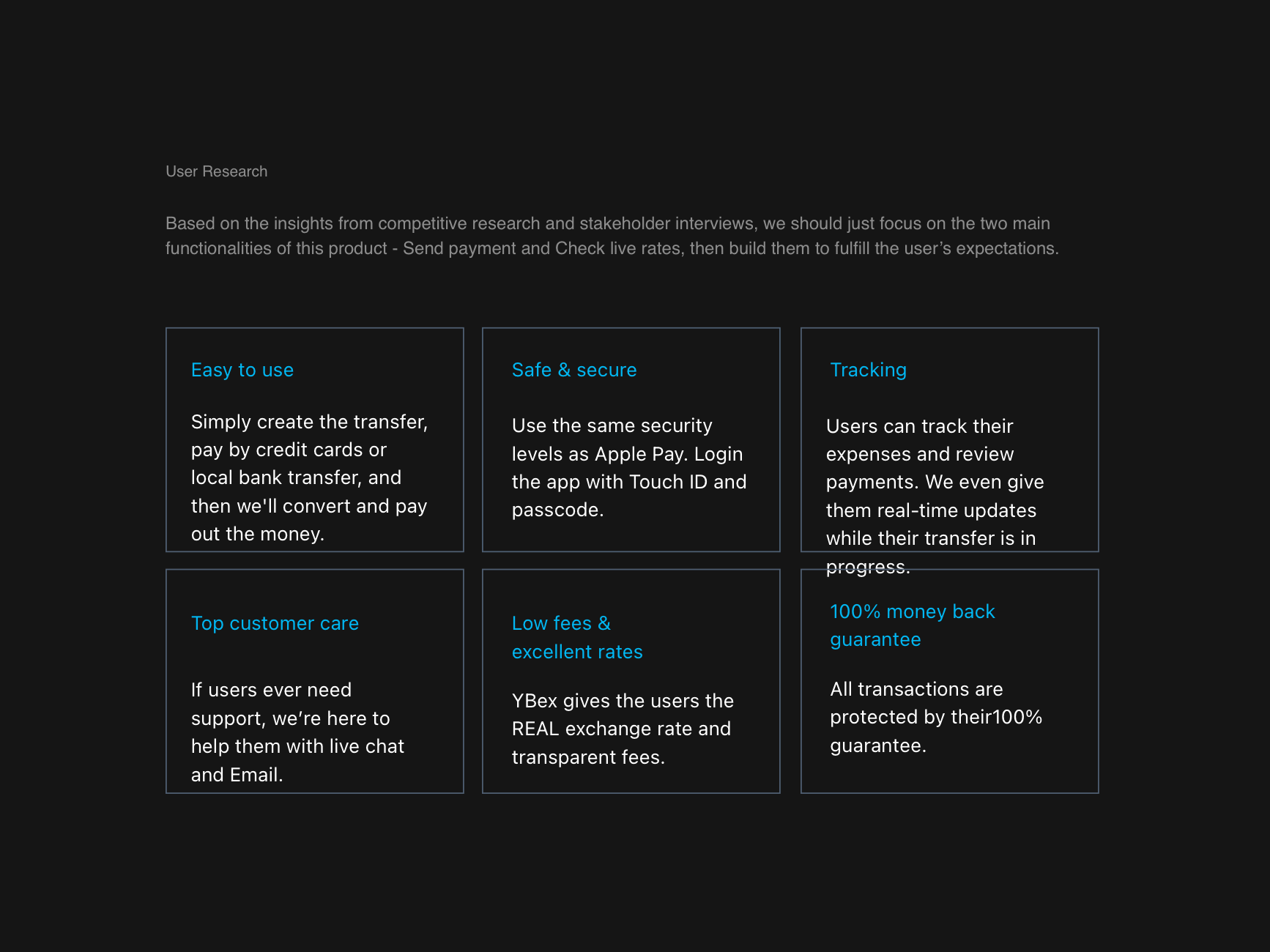
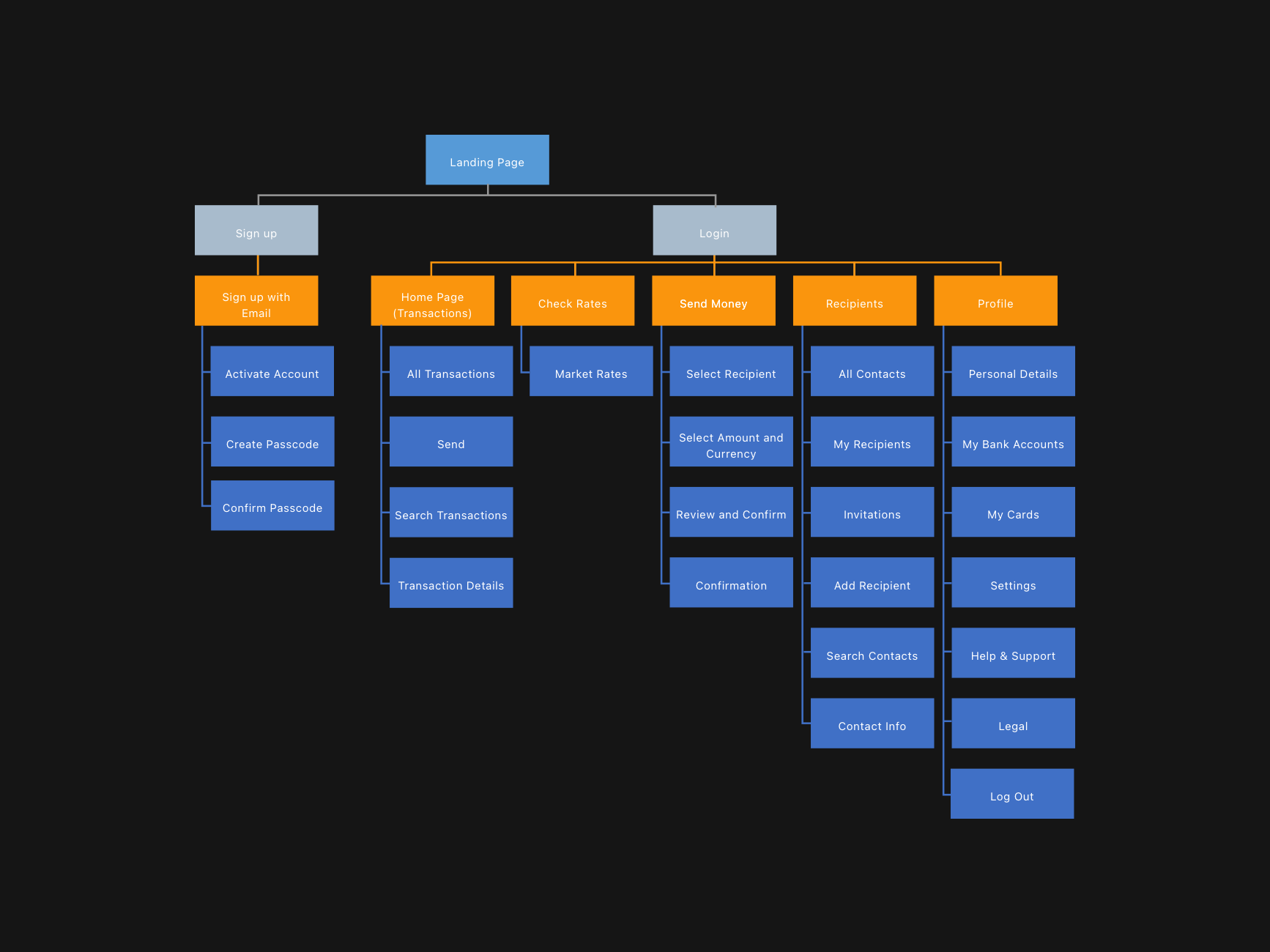
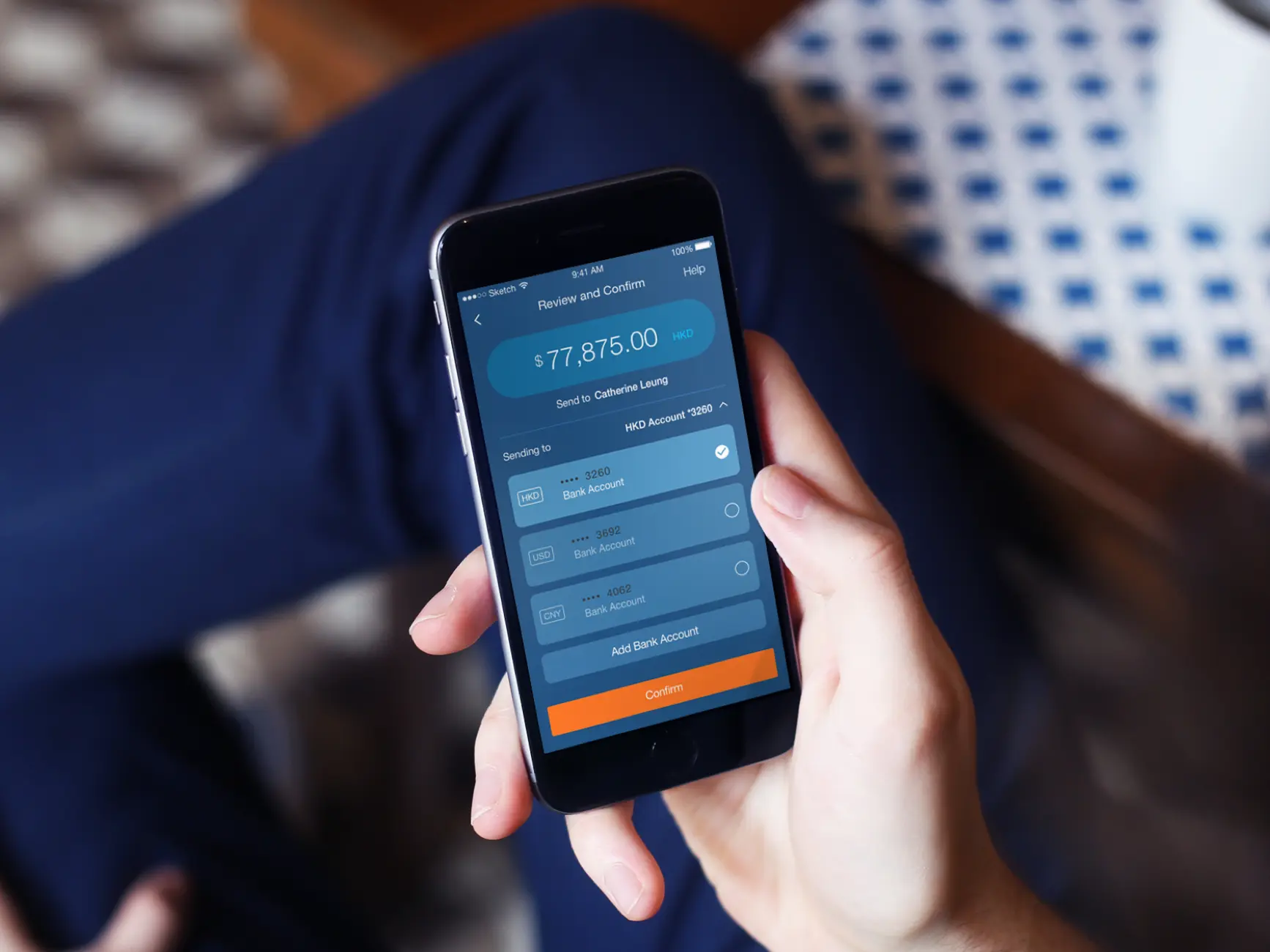
The redesign started with the information architecture. By mapping out the full user flow and identifying where drop-off occurred, it became clear that the complexity wasn't in the tasks themselves — it was in the navigation structure around them. Simplifying the sitemap and rebuilding the user flow around the two core actions reduced friction dramatically and made the product feel much more purposeful. The visual design followed the same logic: clean, direct, and built around trust signals that matter in financial products — clear rate displays, transparent fee breakdowns, and a UI that communicates reliability without feeling cold.
Project Learnings
The most valuable conversation on this project wasn't with a user — it was with leadership, convincing them that reducing features was the right call. Prioritisation is easy to talk about and hard to do when there are competing stakeholders invested in different parts of the product. This project sharpened my ability to make a clear case for simplicity using evidence, and to focus design energy where it actually moves the needle for users.